NetActuate has launched Global Edge Storage
Explore


NetActuate has launched Global Edge Storage

By clicking "Accept all" you allow cookies that improve your experience on our site, help us analyze site performance and usage, and enable us to show relevant marketing content. You can manage cookie settings below. By clicking “Confirm selection” you agree with the current settings.

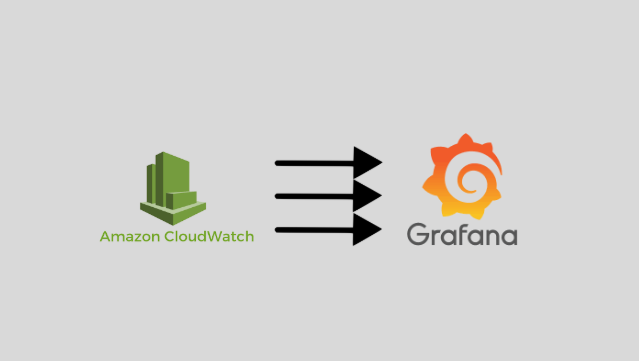
Observability is one of the key cloud services considerations and cloud developers are encouraged to switch on native observability services such as AWS CloudWatch, Azure Monitor, or Google Cloud Operations.
These monitoring services work seamlessly within their respective environment. However, they use proprietary data formats, vendor-specific APIs, and platform-dependent visualization tools that make it nearly impossible to maintain consistent monitoring across hybrid environments or migrate observability infrastructure without starting from scratch.
There’s also a whole market of third-party observability products that ingest proprietary cloud telemetry and logs. While they work well, this also comes at a rather high price point.
An attractive alternative for cost aware enterprises consists of open standards and portable tooling. Building observability architectures on open-source foundations gains the flexibility to deploy consistent monitoring across any infrastructure environment while avoiding the operational complexity and cost implications of vendor-specific monitoring lock-in.
To understand this, imagine an AWS CloudWatch-monitored application, where data is formatted using AWS's proprietary namespaces, dimensions, and statistics models. These implementation details become embedded in the DevOps and SRE teams’ processes and tooling, creating dependencies that extend far beyond simple configuration changes.
Adopting telemetry standards that work consistently across any monitoring backend can mitigate these issues. OpenTelemetry provides a vendor-neutral framework for collecting metrics, logs, and traces that can be processed by various observability platforms without requiring application changes. Applications instrumented with OpenTelemetry SDKs produce telemetry data in standardized formats that maintain semantic consistency regardless of the ultimate storage destination.
This approach delivers immediate benefits beyond simple portability. OpenTelemetry instrumentation provides richer context and more detailed performance insights than many vendor-specific monitoring solutions. The standardized data format enables advanced correlation capabilities between metrics, logs, and traces that proprietary systems often can't achieve due to format incompatibilities.
Metrics collection through Prometheus offers similar advantages by establishing consistent labeling and naming conventions that work across environments. PromQL queries written for one deployment environment work identically in others, enabling organizations to maintain consistent alerting and dashboard logic regardless of underlying infrastructure. This consistency proves invaluable when operating applications across development, staging, and production environments that may run on different cloud providers.
Distributed tracing capabilities represent a particularly sophisticated area where vendor lock-in can significantly impact application observability strategies. AWS X-Ray, Azure Application Insights, and Google Cloud Trace provide powerful distributed tracing capabilities but use proprietary trace formats, analysis algorithms, and visualization approaches that create deep dependencies in application architecture.
X-Ray instrumentation exemplifies this challenge through AWS-specific concepts like segments, subsegments, and annotations that become embedded in application code. Sampling strategies, trace collection behavior, and analysis capabilities follow X-Ray-specific patterns that cannot be directly replicated on other tracing platforms, often requiring significant application changes when migrating to alternative solutions.
OpenTelemetry distributed tracing eliminates these dependencies by providing standardized instrumentation that produces vendor-neutral trace data. Consistent span naming conventions, attribute schemas, and sampling strategies work identically across different tracing backends like Jaeger, Zipkin, or commercial solutions. Applications instrumented with OpenTelemetry can seamlessly switch between different tracing platforms without code changes, enabling organizations to optimize for cost, performance, or feature requirements.
Alerting and dashboard portability complete the observability independence picture by ensuring that operational knowledge and procedures remain consistent across environments. CloudWatch Alarms with SNS integration create AWS-specific notification patterns and automated remediation workflows that must be completely redesigned when moving to other platforms.
Open-source alerting solutions like Prometheus AlertManager provide sophisticated alerting capabilities with standard notification channels and integration patterns that work across any deployment environment. Alert rules defined in standard formats can be version-controlled, tested, and deployed consistently whether applications run in cloud environments, on-premises data centers, or hybrid configurations.
Dashboard portability through tools like Grafana enables organizations to maintain consistent visualization and analysis capabilities across all environments. Dashboards defined as code can be version-controlled and deployed automatically, ensuring that operational teams have identical visibility regardless of underlying infrastructure. This consistency proves particularly valuable during incident response when teams need reliable, familiar interfaces to diagnose and resolve issues quickly.
Organizations that implement portable observability architectures position themselves to take advantage of innovative infrastructure and monitoring solutions that prioritize open standards and interoperability. Platforms like NetActuate's infrastructure services, built on open-source foundations, integrate seamlessly with standards-based observability tooling, demonstrating how principled architectural decisions enable operational flexibility while avoiding the long-term costs and complexity of vendor-specific monitoring dependencies.
Learn more about building observability using open source tooling, along with all the other common infrastructure and service setups used by cloud-native organizations in our eBook: Architecting for Openness: A Guide for Avoiding Hyperscaler Lock-in.

Reach out to learn how our global platform can power your next deployment. Fast, secure, and built for scale.
.svg)