Vinyl Cache + VaaS Console Featured
Open-source Varnish HTTP accelerator with the Allegro VaaS web console.
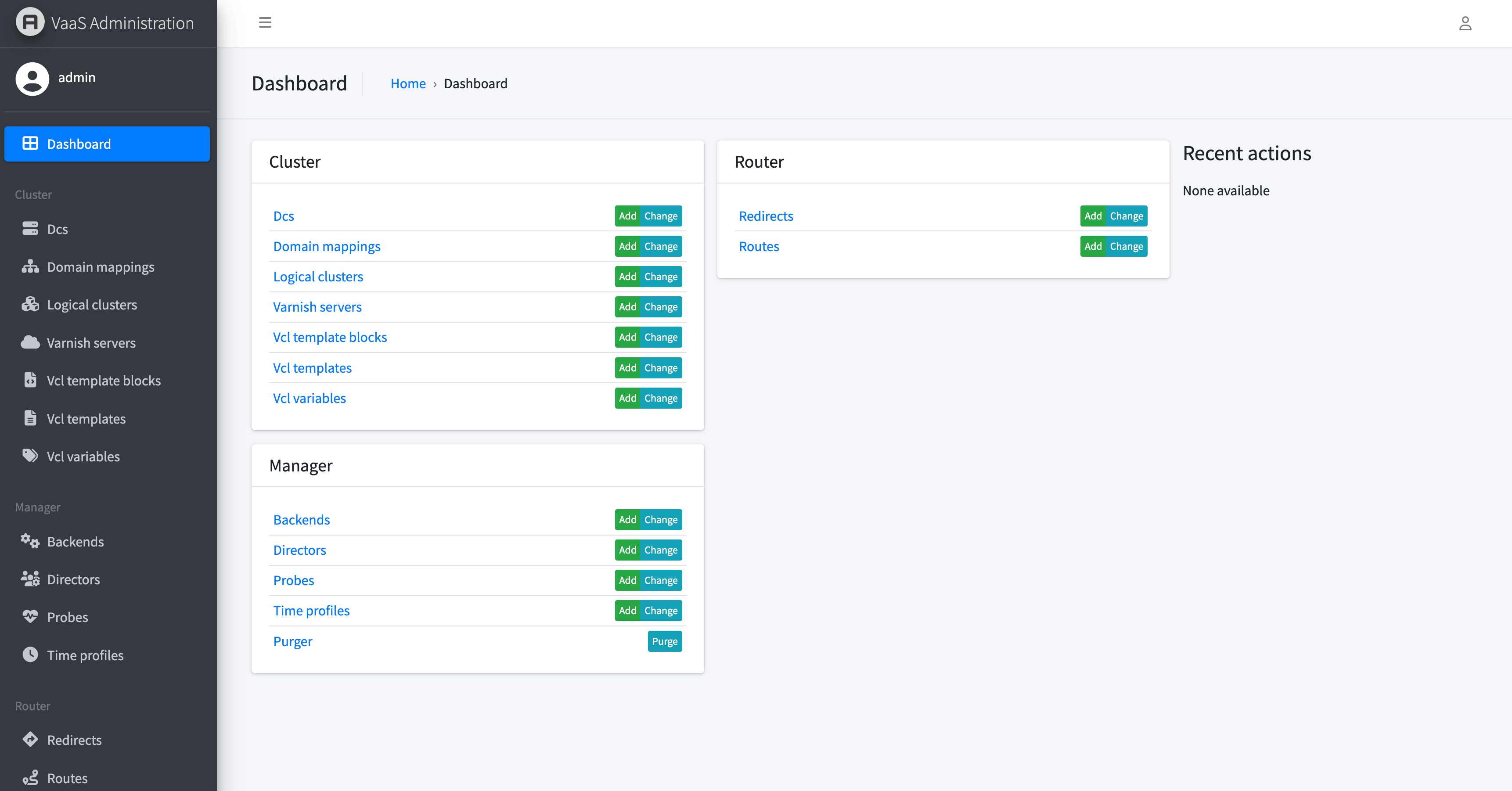
Vinyl Cache is the open source web application accelerator and caching HTTP reverse proxy formerly known as Varnish Cache (BSD licensed, https://vinyl-cache.org/). It sits in front of an origin (web app, API, or media packager), serves hot content from memory, and typically speeds up delivery by a factor of 300 to 1000. Cache policy is written in VCL, its flexible configuration language, so cache keys, TTLs, header normalization, purging, and per-route rules are all under your control.
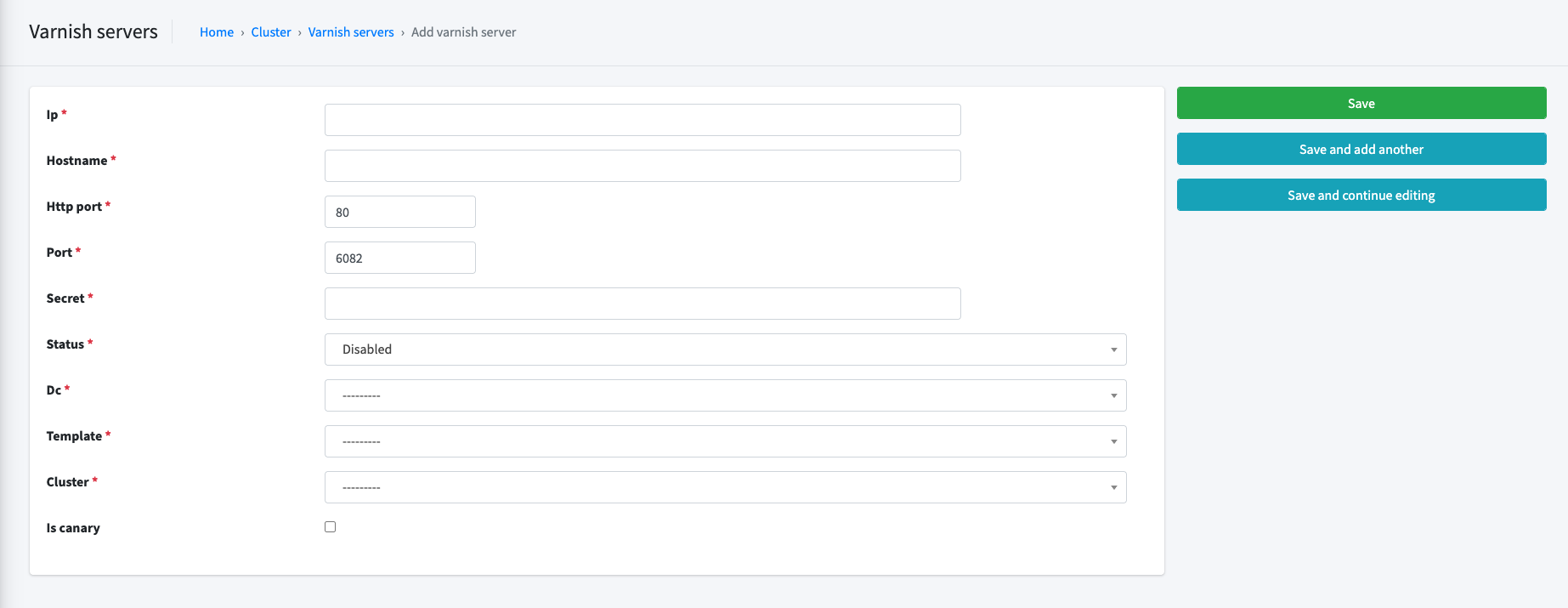
This listing packages Vinyl Cache with the Allegro VaaS web console (Varnish as a Service, Apache 2.0, https://github.com/allegro/vaas), so the appliance is a robust, self-serve, web-managed cache rather than a bare config file. VaaS is a Django web app plus REST API that manages a whole farm of Vinyl / Varnish nodes from one place: register cache servers, organize them into clusters, define backends and directors (load balancing, weights, health probes, datacenter-aware failover), manage routing and redirects, and version VCL templates. It generates VCL and pushes it to the nodes over the native Varnish management API with no agent on the cache boxes.
What the appliance boots
- A Vinyl Cache (Varnish 7.7) data-plane node accelerating your origin on port 80
- The VaaS web console and REST API on port 3030, pre-wired to manage that local node
- Add more Vinyl nodes across NetActuate PoPs later and manage the whole fleet from the same console
Key features
- In-memory HTTP caching that serves hot objects in microseconds and offloads the origin
- Request coalescing so one backend fetch satisfies many simultaneous clients
- VCL policy control for cache keys, TTLs, header rules, purging, and bans
- Grace mode and stale-while-revalidate to keep serving during origin slowdowns
- Backend health checks, directors, and datacenter-aware failover, all managed from the web GUI
- Streaming and large-object delivery, ideal as a video or download origin shield
Use cases
- Origin shield in front of your app or an existing CDN to cut origin egress and load
- Accelerating dynamic sites and APIs by caching cacheable responses near users
- Video, software, and large-file distribution needing high-throughput, memory-speed delivery
- Traffic-spike and flash-crowd absorption for launches, sales, and live events
Open source Vinyl Cache and VaaS are community open source software under their own licenses (BSD and Apache 2.0). NetActuate sponsors and hosts the project and provides this ready-to-run appliance; the software belongs to its communities. Placing a node in a PoP near your audience answers cache hits with minimal round-trip latency instead of a trip back to a distant origin.
Frequently asked questions
How do I deploy Vinyl Cache + VaaS Console on NetActuate?
Use the Deploy on NetActuate button to talk to our team. We provision Vinyl Cache + VaaS Console on a NetActuate virtual machine in the point of presence you choose, close to your audience. Each deployment runs in the single location you select.
What does it cost to run Vinyl Cache + VaaS Console?
Vinyl Cache + VaaS Console is open-source software and free to run on the marketplace - you pay only for the NetActuate compute (virtual-machine size and location) it runs on, at standard rates. There are no usage-based software fees.
Where can Vinyl Cache + VaaS Console run?
Vinyl Cache + VaaS Console can be deployed in any of NetActuate's 45+ points of presence across every continent, so you can place ingest, transcode, delivery and caching close to your contributors and viewers.
Who supports Vinyl Cache + VaaS Console?
NetActuate operates and supports the underlying infrastructure - the virtual machine, network and edge platform. The application itself is supported by its upstream open-source project.